
If you live in one of Sydney’s leafy, shaded, or coastal suburbs, you’ve probably noticed patches of green creeping across your roof tiles. Moss thrives in Sydney’s humid pockets, think Northern Beaches, Manly, the Hills District, and any home tucked under a canopy of trees. While it might look harmless (or even a bit charming) from the street, moss can cause serious damage if left untreated. This guide walks you through exactly how to eliminate moss on roof tiles, why it grows in the first place, and how to stop it from coming back.
Why Moss Grows on Sydney Roofs
Sydney’s climate is a near-perfect breeding ground for moss. Warm temperatures, high rainfall, and long stretches of humidity create the damp conditions moss needs to establish itself. Add in overhanging trees, shaded roof sections that rarely see direct sun, and poor airflow, and you’ve got the ideal recipe for moss and algae growth.
Suburbs close to the coast or bushland such as Avalon, Frenchs Forest, Belrose, and Terrey Hills tend to see the worst of it, simply because morning dew and sea mist keep roof tiles damp for longer each day. Older terracotta and concrete tile roofs are especially vulnerable, as their porous surfaces give moss spores something to grip onto and grow.
Understanding why moss appears is the first step toward learning how to eliminate moss on roof surfaces for good, rather than just treating the symptoms every few months.
Why You Shouldn’t Ignore Roof Moss
It’s tempting to dismiss moss as a purely cosmetic issue, but it’s far more than that. Moss retains moisture against the tile surface, which can lead to:
- Tile deterioration: constant dampness weakens porous tiles over time, causing them to crack or crumble.
- Blocked gutters and downpipes: moss clumps break off and wash into your gutters, leading to water pooling and overflow.
- Water ingress: as moss lifts tiles or works into gaps, rainwater can seep beneath the roofline and into your ceiling cavity.
- Reduced roof lifespan: a roof under constant moisture stress ages faster and may need earlier roof repair or replacement.
- Lower kerb appeal: a moss-covered roof can make even a well-maintained home look neglected, which matters if you’re planning to sell.
Given these risks, it makes sense to act early. The sooner you eliminate moss on roof tiles, the less chance it has of compromising your home’s structure.
How to Eliminate Moss on Roof Tiles: Step-by-Step
1. Inspect the Roof First
Before you start any roof moss removal, get a clear picture of the damage. Check for cracked, lifted, or missing tiles, and note which sections are heaviest with moss growth. This tells you whether you’re dealing with a simple clean or whether some roof repair will be needed alongside the treatment.
2. Clear Loose Debris
Use a soft broom or a leaf blower to remove loose leaves, twigs, and surface debris. This makes it easier to see the extent of the moss and prevents debris from clogging gutters during the cleaning process.
3. Apply a Moss Treatment Solution
A proper roof moss treatment involves applying a fungicidal or moss-killing solution designed for roof tiles. These treatments break down moss at the root, rather than simply stripping the visible growth. Avoid harsh chemicals like undiluted bleach, which can discolour tiles and damage surrounding plants, gutters, and stormwater systems.
4. Gently Remove the Moss
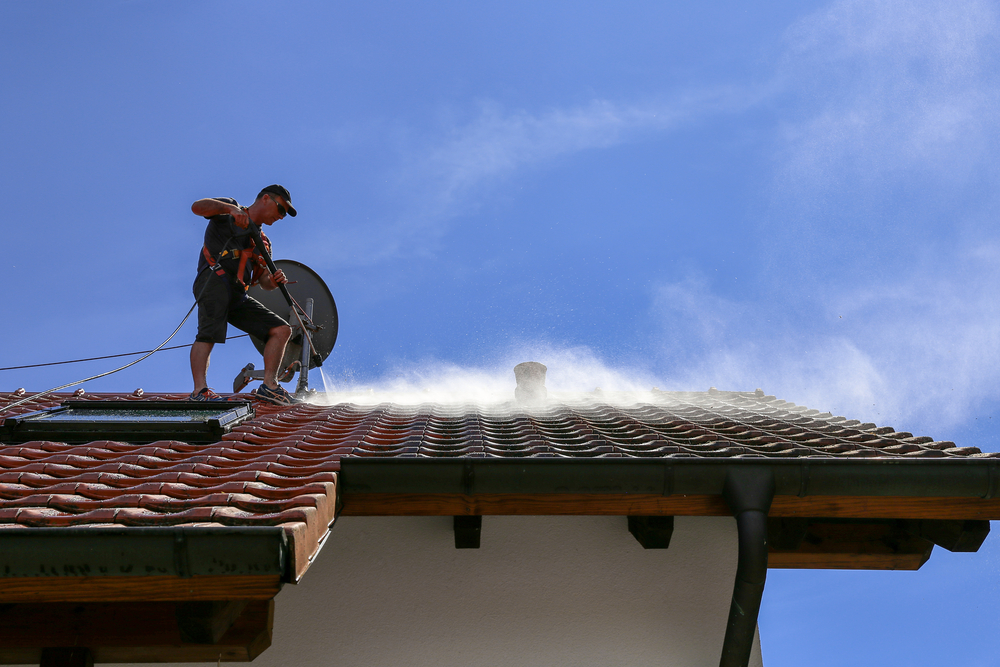
Once the treatment has had time to work, moss can usually be removed with a soft-bristle brush or low-pressure wash. This is where many DIYers go wrong: high-pressure water blasters can strip the protective coating off tiles, crack them, or force water underneath, creating leaks. Gentle, low-pressure roof moss cleaning is always the safer approach, especially on older terracotta tiles.
5. Rinse and Inspect Again
After moss removal from roof surfaces, rinse thoroughly with clean water to wash away treatment residue and loosened debris. Walk (or have a professional walk) the roof again to check for any tiles that need repositioning or replacing.
6. Apply a Protective Coating (Optional)
Some homeowners choose to apply a sealant or anti-fungal roof coating after cleaning. This adds a protective barrier that makes it harder for moss spores to take hold again, extending the time between treatments.
DIY Roof Moss Removal vs Calling a Professional
Many Sydney homeowners attempt DIY roof moss removal, and for small, easily accessible areas, this can work. However, there are good reasons to consider a professional roof moss treatment instead:
- Safety: working at height on a wet, mossy, sloped roof is genuinely dangerous, and falls are one of the most common causes of serious home DIY injuries.
- Tile damage risk: inexperienced pressure washing is one of the leading causes of cracked and dislodged roof tiles.
- Proper diagnosis: a professional roofer can spot underlying issues, like damaged flashing or deteriorating tiles, that a homeowner might miss.
- Longer-lasting results: commercial-grade treatments and correct application techniques mean the moss stays gone for longer.
If your roof is steep, two-storey, or heavily covered in moss, it’s worth getting a licensed roofer to handle the moss removal from roof tiles safely and thoroughly.
Preventing Moss From Coming Back
Removing moss is only half the job; prevention is what keeps your roof clear long-term. A few practical steps make a real difference:
- Trim overhanging branches to let more sunlight and airflow reach the roof.
- Clean gutters regularly so water doesn’t pool and create damp conditions.
- Install zinc or copper strips along the ridge line; rainwater washing over these metals naturally inhibits moss and algae growth.
- Schedule regular roof inspections, particularly before and after Sydney’s wetter seasons.
- Reapply protective treatments every 12 to 24 months, depending on how shaded and humid your property is.
Combining these habits with periodic professional roof moss cleaning is the most reliable way to eliminate moss on roof tiles permanently, rather than fighting the same battle every year.
When Moss Signals a Bigger Roof Repair Issue
Sometimes moss is just a nuisance that needs cleaning. But in other cases, heavy or fast-growing moss points to a deeper problem, such as poor drainage, damaged flashing, or ageing tiles that retain moisture longer than they should. If you’re noticing sagging patches, damp ceiling stains, or tiles that seem to be lifting, it’s a sign your roof may need more than a clean; it may need proper roof repair. Addressing these underlying issues alongside moss removal ensures you’re not just treating the surface problem while the real cause continues to do damage underneath.